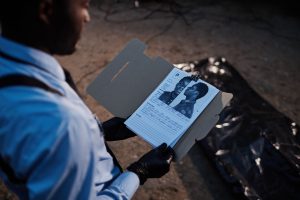

Missing persons cases are among the most time-sensitive investigations in law enforcement. Every minute matters, especially in high-risk situations. The missing persons investigation process is designed to move quickly while remaining structured and evidence-based. It combines immediate response, detailed analysis, and coordinated efforts between multiple parties. Unlike other investigations, these cases often begin with uncertainty. There may be no clear indication of whether the disappearance is voluntary, accidental, or criminal. This complexity makes a systematic approach essential.
Why a structured missing persons investigation process is critical
A clear process ensures that no critical step is missed during the early stages. Time plays a crucial role. Delays can reduce the chances of locating the missing person safely. Investigators must quickly assess the situation and decide on the level of urgency. Some cases involve individuals who may have left voluntarily, while others indicate potential danger. The process helps distinguish between these scenarios. It also ensures that resources are used effectively. Without structure, investigations can become disorganized, leading to missed opportunities and slower outcomes.
Initial response when a person is reported missing
The process begins when a report is filed. Authorities gather basic details about the missing individual, including identity, last known location, and time of disappearance. Contrary to common belief, there is no mandatory waiting period in most jurisdictions. Immediate reporting is encouraged. Investigators then conduct a preliminary risk assessment. Factors such as age, health, mental condition, and circumstances of disappearance are evaluated. Based on this assessment, the case is classified as low, medium, or high risk. High-risk cases trigger immediate and intensive action, including search operations and alerts.
Gathering background information
Personal and behavioral profile of the missing individual
Understanding the person is key to the investigation. Authorities examine daily routines, habits, and recent changes in behavior. This helps determine whether the disappearance is unusual. Patterns often reveal clues about possible destinations or actions.
Social connections and last known contacts
Investigators identify people who had recent contact with the missing individual. Friends, family members, coworkers, and acquaintances are interviewed. These conversations provide insight into the individual’s state of mind and recent interactions.
Digital footprint and recent movements
In today’s world, digital activity plays a major role. Phone records, social media activity, and financial transactions are analyzed. These digital traces can reveal movement patterns and last known locations. Even small details can become critical leads.
Search and field investigation strategies
Once initial information is gathered, search operations begin. These are carefully planned based on available data. Search teams may include law enforcement, trained volunteers, and specialized units. Geographic analysis helps determine where to focus efforts. Areas near the last known location are prioritized. In some cases, drones, search dogs, and aerial support are used. Coordination is essential to avoid duplication of effort and ensure coverage. The search strategy evolves as new information becomes available.
Role of forensic analysis in missing persons cases
Collection of physical evidence
Investigators collect items that may provide clues, such as clothing, personal belongings, or objects found at the scene. These items are carefully preserved and documented.
DNA and identification techniques
DNA plays a critical role, especially in long-term cases. Family members may provide DNA samples for comparison. This helps identify unknown remains or confirm identity when a person is found.
Analysis of trace evidence
Small traces like fibers, soil, or environmental elements can provide valuable information. These details help reconstruct events and identify possible locations connected to the disappearance.
Interviewing witnesses and persons of interest
Interviews are a key part of the missing persons investigation process. Investigators speak with individuals who may have relevant information. Effective interviewing requires careful questioning and observation. Inconsistencies in statements can reveal hidden details or lead to new directions. Psychological factors also play a role. People may withhold information or provide incomplete accounts. Skilled investigators work to build trust while verifying facts.
Use of technology in modern investigations
Technology has significantly improved how missing persons cases are handled. Surveillance footage from cameras can help track movements. Mobile phone data provides location history and communication patterns. GPS tracking, when available, offers precise movement data. Public alert systems, such as emergency broadcasts, help involve the community. Databases allow investigators to cross-reference information quickly. These tools make the investigation faster and more efficient.
Collaboration between agencies and communities
Missing persons investigations often require cooperation between multiple organizations. Local law enforcement works with regional and national agencies. Non-profit organizations and volunteer groups also play a role, especially in search efforts. Media coverage helps raise awareness and generate public tips. Community involvement can provide leads that would otherwise be missed. Effective collaboration ensures that all available resources are used.
Challenges in the missing persons investigation process
Despite structured methods, challenges remain. One of the biggest issues is delayed reporting. The longer the delay, the harder it becomes to gather reliable evidence. Another challenge is the lack of clear information. Some cases begin with very few leads. False information can also misdirect investigations and waste resources. Jurisdictional issues may arise when cases cross regional boundaries. Limited resources can further complicate large-scale searches. These challenges require adaptability and strong coordination.
Resolution pathways in missing persons cases
Missing persons cases can end in different ways. In many cases, individuals are found safe, often through quick response and effective search efforts. In more complex cases, forensic methods may be required to identify remains. Some cases remain unresolved for years and become cold cases. Advances in technology and forensic science can reopen these cases and provide new leads. Resolution does not always mean closure, but it provides answers and direction for families and investigators.
Preventive measures and awareness strategies
Prevention is an important part of addressing missing persons cases. Public awareness campaigns help educate people about safety and risk factors. Families are encouraged to maintain communication and share information about routines. Technology such as location sharing can also help in emergencies. Early reporting is one of the most effective preventive measures. The sooner authorities are informed, the higher the chances of a positive outcome.
Conclusion
The missing persons investigation process is a complex but structured system designed to handle uncertainty with precision. It combines rapid response, detailed analysis, and collaboration. Technology and forensic science continue to improve its effectiveness. However, success still depends heavily on timing, coordination, and accurate information. By refining investigative methods and increasing public awareness, outcomes can continue to improve. Each case is unique, but a strong process ensures that every possible step is taken to find answers and bring resolution.