
Modern criminal investigations rely heavily on scientific evidence. DNA profiling has become one of the most powerful tools for identifying suspects. It allows investigators to move beyond assumptions and focus on biological proof. Unlike traditional methods, DNA evidence is highly specific to each individual. This makes it extremely useful in linking people to crime scenes or excluding them from suspicion. In complex investigations, where witness accounts may be unclear, DNA profiling often provides the clarity needed to move cases forward.
Why DNA profiling is a key tool in suspect identification
Traditional suspect identification methods often rely on eyewitness testimony or circumstantial evidence. These approaches can be unreliable. Human memory is inconsistent, and observations can be influenced by stress or bias. DNA profiling solves this problem by providing objective biological data. It helps law enforcement confirm whether a person was present at a crime scene. It also reduces the risk of wrongful accusations. In modern policing, accuracy is critical, and DNA evidence offers one of the most reliable forms of identification available today.
What DNA profiling reveals about individuals
DNA profiling is based on the fact that every person has a unique genetic code, except identical twins. Forensic scientists analyze specific regions of DNA that vary between individuals. These patterns create a genetic profile that can be compared with other samples. DNA profiling does not reveal everything about a person. It cannot determine behavior, intentions, or exact appearance. Instead, it focuses purely on identification. This distinction is important in forensic science because it prevents misinterpretation of genetic evidence.
How DNA evidence is collected at crime scenes
Biological sources of DNA
DNA can be collected from many biological materials found at crime scenes. These include blood, saliva, skin cells, hair, sweat, and sometimes even touched surfaces. Even very small traces can contain usable genetic material. This is why crime scenes are carefully examined for microscopic evidence.
Crime scene preservation and contamination risks
One of the biggest challenges in DNA collection is preventing contamination. If evidence is not properly handled, foreign DNA can mix with samples. This can lead to incorrect conclusions. Investigators follow strict procedures to protect the integrity of the crime scene. Gloves, sterile tools, and controlled environments are essential.
Documentation and chain of custody
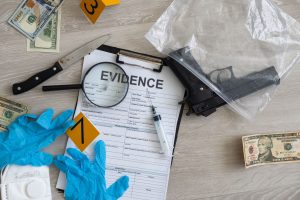
Every piece of DNA evidence must be documented from the moment it is collected. This process is called chain of custody. It ensures that evidence can be traced through every stage of handling. If the chain is broken, the evidence may not be accepted in court. Proper documentation is essential for legal reliability.
Laboratory process behind suspect identification
DNA extraction and purification
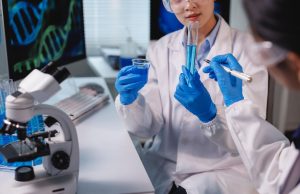
Once collected, samples are sent to a forensic laboratory. Scientists extract DNA from biological material by breaking down cells and isolating genetic content. The DNA is then purified to remove contaminants that could affect analysis. This step ensures that only clean genetic material is used.
Amplification using PCR technology
Crime scene samples often contain very small amounts of DNA. To analyze them effectively, scientists use a method called Polymerase Chain Reaction (PCR). This technique creates millions of copies of specific DNA regions. Without PCR, many forensic analyses would not be possible due to limited sample size.
STR profiling and genetic matching
Short Tandem Repeats (STRs) are specific regions of DNA used in forensic identification. These regions vary significantly between individuals. Scientists analyze multiple STR markers to create a DNA profile. This profile is then compared with known samples. A match between profiles can strongly indicate that a suspect was present at the crime scene.
How investigators link DNA to suspects
DNA profiling becomes powerful when combined with databases. Many countries maintain national DNA databases that store profiles of known individuals. Investigators compare crime scene DNA with these records to find matches. In some cases, there is no direct match. In such situations, familial DNA searching may be used. This method identifies relatives of a suspect based on partial genetic similarity. It helps narrow down investigations even when the exact individual is not immediately found.
Role of DNA profiling in different types of crimes
DNA profiling is used in a wide range of criminal investigations. In violent crimes such as assault or homicide, biological evidence is often present at the scene. Property crimes like burglary can also leave behind trace DNA on objects or entry points. In cold cases, DNA profiling has become especially valuable. Old evidence can be retested using modern technology, sometimes leading to breakthroughs years after the crime occurred. This versatility makes DNA one of the most important forensic tools.
Strengths of DNA profiling in suspect identification
One of the greatest strengths of DNA profiling is its accuracy. When properly collected and analyzed, DNA evidence has a very low probability of error. It can confirm a suspect’s presence or exclude them entirely. Another strength is its acceptance in court. Judges and juries often consider DNA evidence highly reliable. It also works well even with small or degraded samples, making it useful in difficult investigations.
Limitations and challenges in using DNA evidence
Despite its strengths, DNA profiling has limitations. Contamination remains a serious risk and can affect results. In some cases, DNA samples are mixed, containing material from multiple individuals. This makes interpretation more complex. Degraded DNA from old or exposed evidence can also be difficult to analyze. Another challenge is statistical interpretation. While DNA matches are highly reliable, they still involve probability calculations that must be carefully explained in court.
Legal and ethical considerations in suspect identification
The use of DNA profiling raises important ethical and legal concerns. Privacy is a major issue, especially regarding national DNA databases. Storing genetic information must be carefully regulated to prevent misuse. Consent is another important factor, particularly when collecting DNA from individuals not yet convicted of a crime. There is also concern about over-reliance on genetic evidence without considering other investigative factors. Ethical guidelines help ensure DNA is used responsibly and fairly.
Real-world examples of DNA-based suspect identification
DNA profiling has solved many real-world cases. Cold cases that remained unsolved for decades have been reopened and resolved using new DNA techniques. In some cases, individuals wrongly convicted have been exonerated after DNA testing proved their innocence. High-profile criminal investigations also rely heavily on DNA evidence to confirm suspect involvement. These real-world applications demonstrate how powerful genetic evidence has become in modern justice systems.
Future advancements in DNA-based suspect identification
The future of DNA profiling is rapidly evolving. Rapid DNA testing may allow results to be generated directly at crime scenes within hours. Artificial intelligence is expected to improve the analysis of complex genetic data. Global DNA databases could make cross-border crime investigations more efficient. Advances in sensitivity will also allow scientists to work with even smaller samples. These innovations will make suspect identification faster, more accurate, and more widely accessible.
Conclusion
DNA profiling has transformed how suspects are identified in criminal cases. It provides a scientific, reliable, and highly accurate method of linking individuals to crime scenes. While challenges such as contamination and ethical concerns exist, strict procedures and advancing technology help address them. In modern criminal justice systems, DNA profiling is not just a supporting tool. It is a central element in ensuring accurate investigations and fair outcomes.